Wildlife plot
Planning a wildlife plot
A wildlife plot is a set of measurements before it is a habitat: a pond 60cm deep, a hedge at five plants per metre, a meadow mown at the end of summer. This page sets out the arithmetic and the order of work for turning a neglected corner into ground an animal can live in, following the planting plan published on this address in 2004.
The editors of Notes from W4 –
Reserve first, vegetable bed second
The plan archived at this 2004 wildlife-allotment page states its principles in two lines, and they are worth copying exactly: the reserve is to be cultivated organically, and the plants are to be restricted to native species. Everything else follows from that pair. Organic cultivation rules out quick chemical fixes, so the soil has to be built the slow way, with mulch and matter returned to the ground – the same work described on our page on making compost: heaps, trenches and what goes in. The native-species rule rules out most of what a garden centre sells, and it is what gives the rest of the plan its shape.
The pond sets the level
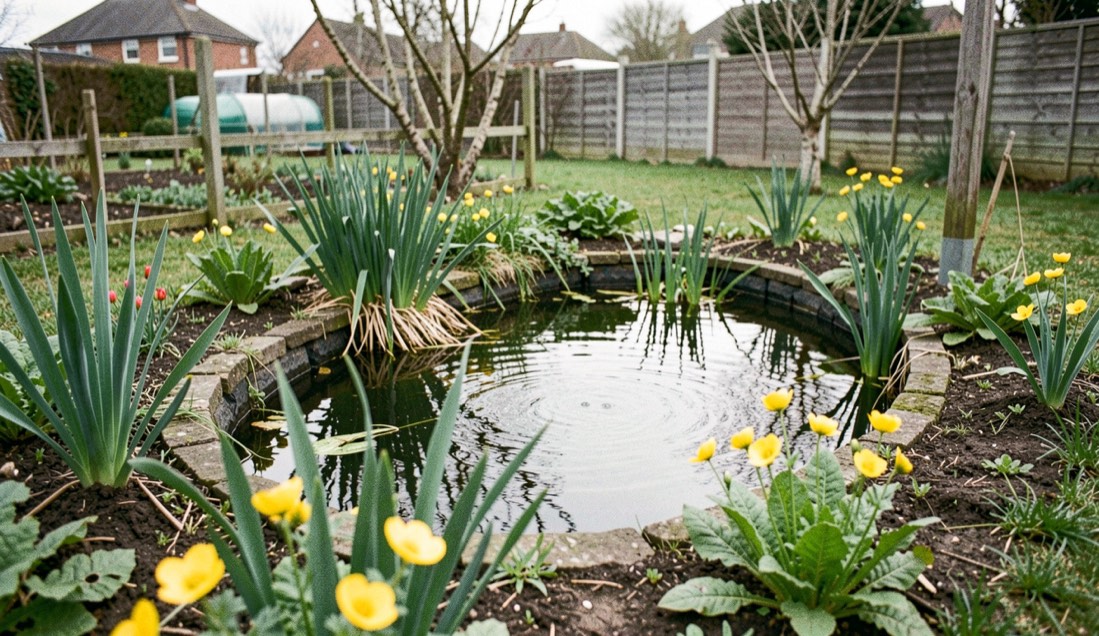
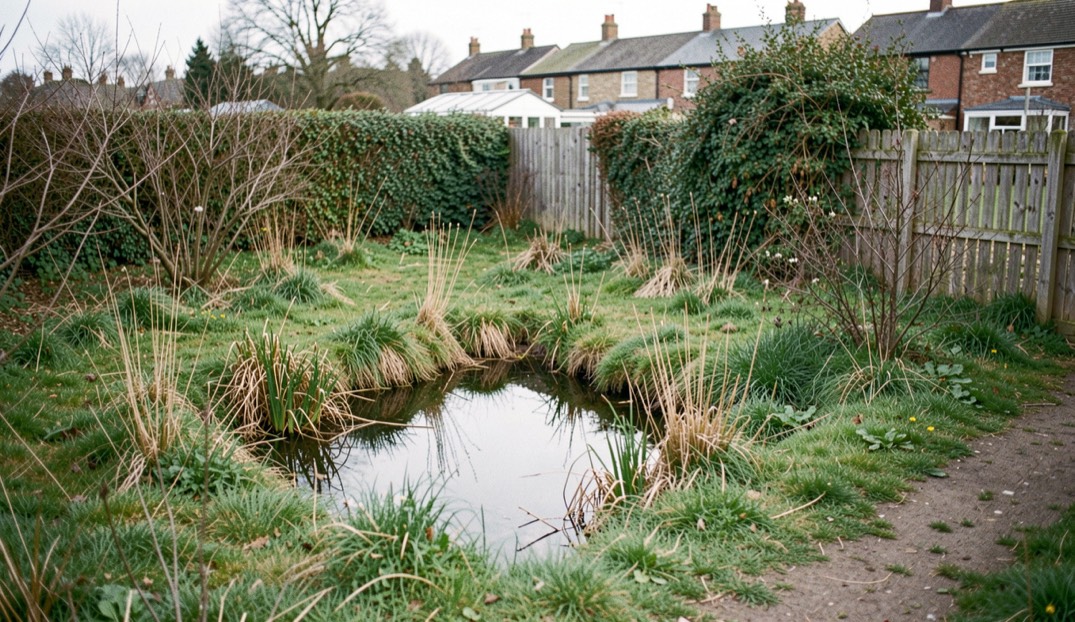
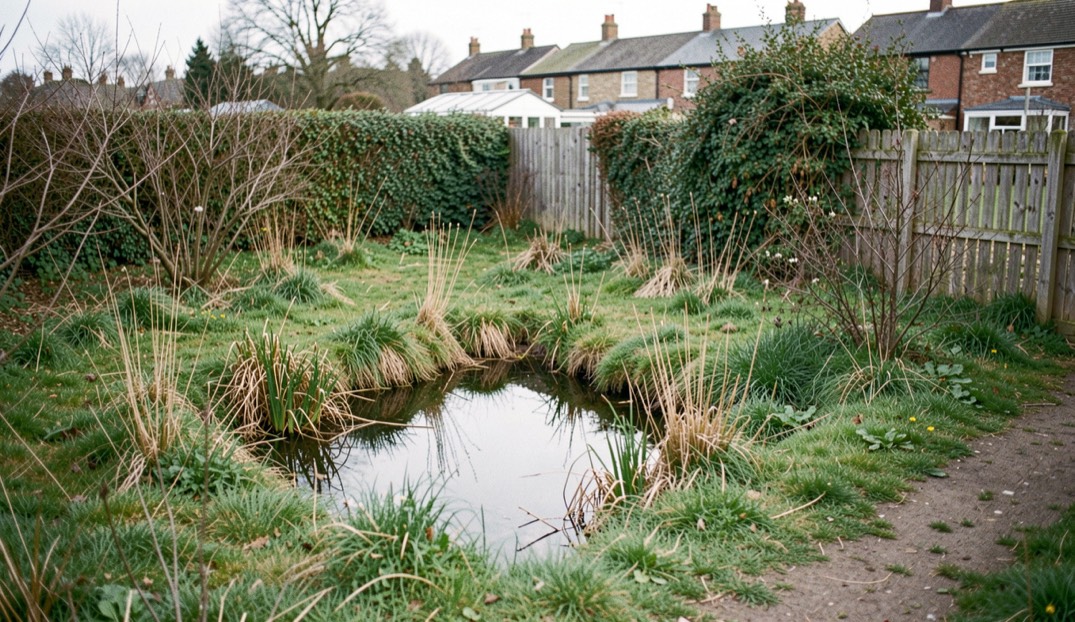
The wet end of the plot is the part where the numbers matter most. The pond is lined with a butyl membrane, and so is a separate boggy area beside it, the membrane of the pond being separate from the boggy area. The pond is 60cm deep at the centre, with edges that slope gently rather than drop, so that planting shelves exist and animals can get in and out. A vertical-sided pond is a trap, not a habitat. The boggy area is simply a membrane laid to retain moisture where the soil would otherwise drain.
What goes over the ground?
Paths are log slices set in a bed of bark chippings, held in place by wood edging. That is a soft surface: it can be lifted, extended or re-laid as the planting thickens around it, where a slabbed path cannot. The plan also calls for a hide – an open-sided shed with cut-out viewing slots – and for that structure to be covered in climbers such as Hedera (ivy), which turns a dead corner into cover. A hedgehog shelter goes under the existing brambles, not in the open, because bramble already provides what a shelter needs overhead.
Hedge and meadow: the two big plantings
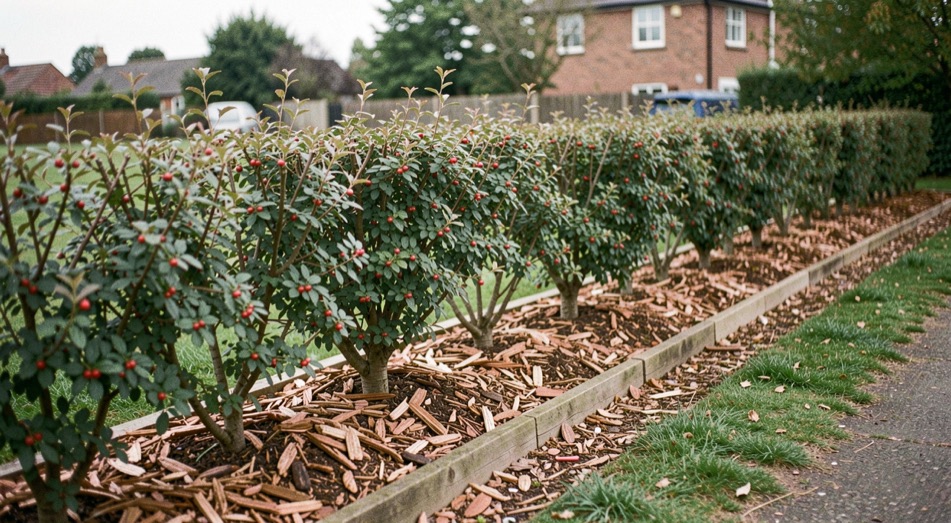
The hedge is the expensive item and the one with the fullest specification, so the species list, the spacing and the cutting cycle are set out on their own page on native hedging: species, spacing and cutting. In outline: two-year seedlings, planted in a double row for density at 30cm spacing, which is five plants per metre, and set 30cm back from the surrounding fences. Half the hedge is cut back each year so that cover is never entirely removed, with a minimum height of 1.6m aimed for, and the whole thing laid or coppiced after ten years.
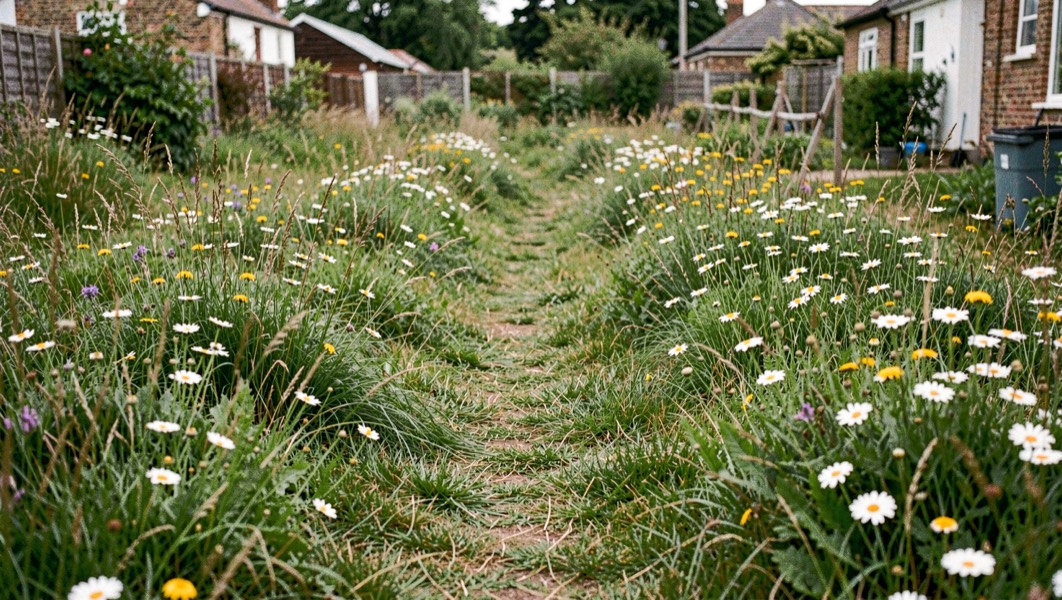
The meadow is the opposite sort of planting: grasses and flowers, sown or plug-planted initially, with the meadow mowed at the end of summer. Three grasses carry it – Agrostis tenuis (common bent), Festuca rubra (red fescue) and Poa pratense (smooth meadow grass) – and the flower list behind them runs to some thirty species, from Centaurea cyanus (cornflower) to Primula veris (cowslip). A mown path is kept through it, for access and for the contrast between short grass and mature dry meadow.
Trees, shrubs and what grows underneath
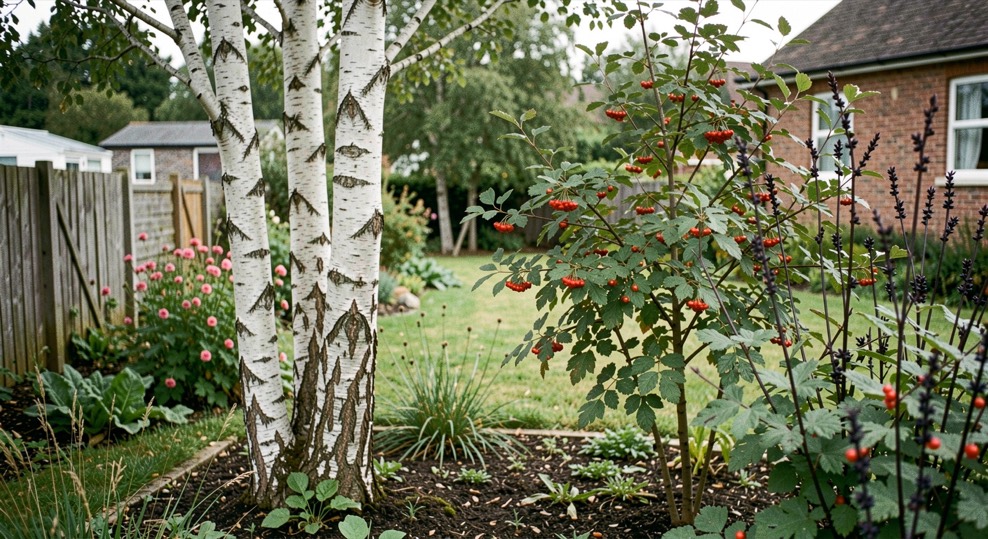
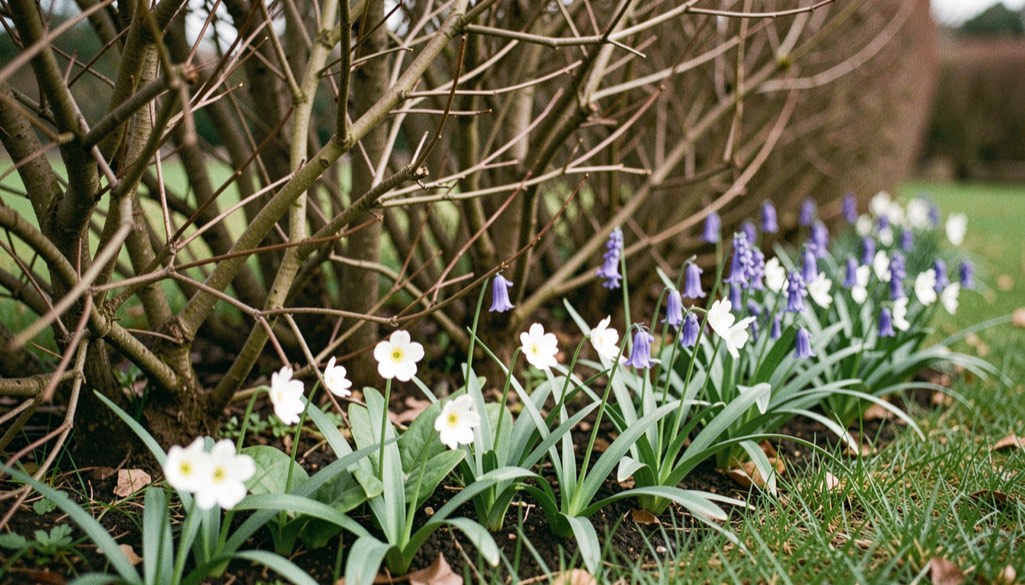
Trees go in at 3m spacing, watered in, mulched, and watered through their first years; shrubs at 1m spacing on the same aftercare. The tree list mixes heights deliberately – Betula pendula (silver birch) at 25m against Sorbus aria (whitebeam) at 10m, with hawthorn and crab apple as smaller varieties – and the shrub list leans on roses, willows and blackthorn. Underneath hedge and trees, the ground is filled with woodland plants: Hyacinthoides non-scripta (bluebell, the native one, not the Spanish), Primula vulgaris (primrose), Anemone nemorosa (wood anemone) and wild strawberry among them. Bare ground under a hedge is a weed problem; planted ground is part of the reserve.
Who is the plot for?
For hedgehogs, for pond life, and for the people who use it – in that order, judging by the warning signs the plan calls for. The signs read plainly: danger pond, no access for unsupervised children, do not pick flowers or disturb plants. The pond depth that makes it a habitat also makes it a hazard, and a plan that does not say so is not finished.
Where to start digging
Start with the membrane work, because the pond and the bog fix the levels everything else sits around. Then fence-line and hedge, five plants per metre of two-year seedlings watered during their first year. The meadow can wait a season; the meadow is seed and plugs, not structure. And before any of it, measure the corner you actually have – a plot is a number of square metres before it is anything else – and write the figure down.
web.archive.org
The Internet Archive’s Wayback Machine, at web.archive.org, holds stored copies of web pages as they appeared on given dates. The wildlife-allotment plan and its species lists used on this page are archived there, captured between 2004 and 2005 at the addresses cited above.
Climate decides the planting: gardening where winter is long and planting for dry ground are the two extremes of the same planning.