The show
The local produce show: how it works
A village-hall produce show looks like a fete, but it is run like an examination. This page sets out how the bench works from an exhibitor’s side: who may enter, what the rules actually say, and how produce is prepared for judging.
The editors of Notes from W4 –
Why the bench matters to a grower
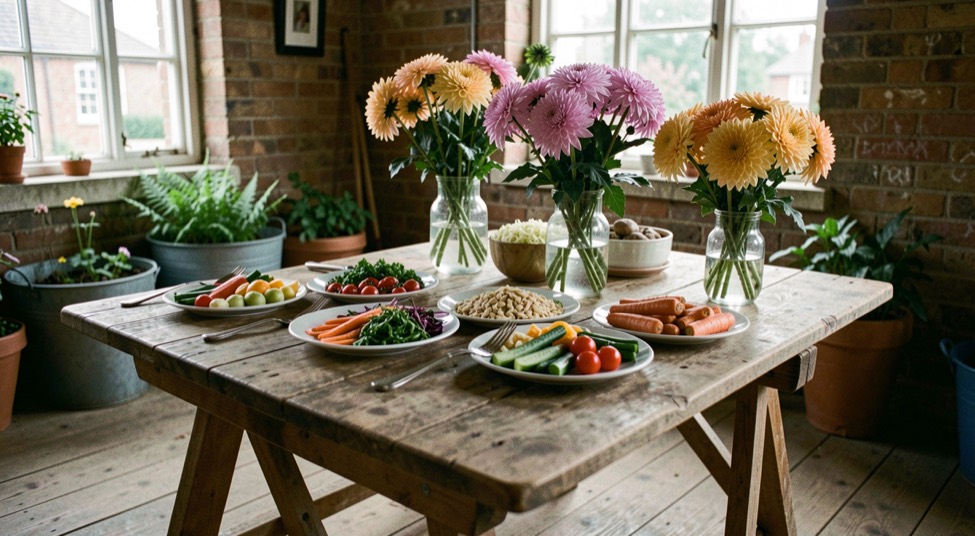
A produce show is a set of classes, a table and a judge with a handbook. That is all it is, and that is why it is useful. Each class asks for an exact thing: nine runner beans with stalks, a vase of flowers, a jar of jam. The exhibitor either presents that thing or is disqualified, so the class list is a list of standards. A grower who reads one learns what “good” means for the crops they already raise on a measured plot, in numbers rather than in adjectives.
Who may put produce on the table?
The rules published on this address are blunt on the point: competition is open to members and non-members alike. There is no qualification to pass and no committee to persuade. An exhibitor makes one entry only in each class, supplies their own vases and containers, though borrowing from the organising body is allowed. What may not be borrowed is the plant itself. Everything entered must have been grown by the exhibitor from seed or bulb, with a single exception: a bought plant may be shown after it has been grown on for at least a month. The gap between those two sentences is where most first disputes begin, and the rules close it in advance.
What the rulebook says about staging
Staging is the work of placing an exhibit on the table, and it is timed. Entries cannot be accepted or altered after five o’clock on the day before the show, and anything not staged by the stated time is refused. Exhibit cards are handed out at staging and placed face downwards beside the produce; only judges and officials remain in the hall during judging. The rulebook also allows the committee to inspect the garden or allotment of any exhibitor, which answers the obvious question of how the “grown by you” rule is policed. It is policed by invitation to look.
How are prizes awarded?
Not every class gives a first prize. Judging follows the RHS Horticultural Show Handbook, and judges are free to withhold any prize where competition is insufficient or the exhibits have not reached show standard. The score for an aggregate trophy is written out plainly, and it is worth seeing side by side:
| Award | Points |
|---|---|
| First prize | 25 |
| Second | 15 |
| Third | 10 |
| Highly Commended | 3 |
A first is worth more than a second and a third combined, so a single good plate of beans can outweigh several also-ran entries. Protests must be written, handed to the show secretary within an hour of opening, and accompanied by a small deposit, refunded only if the objection is upheld. The judges’ decision is final.
Preparing flowers and fruit
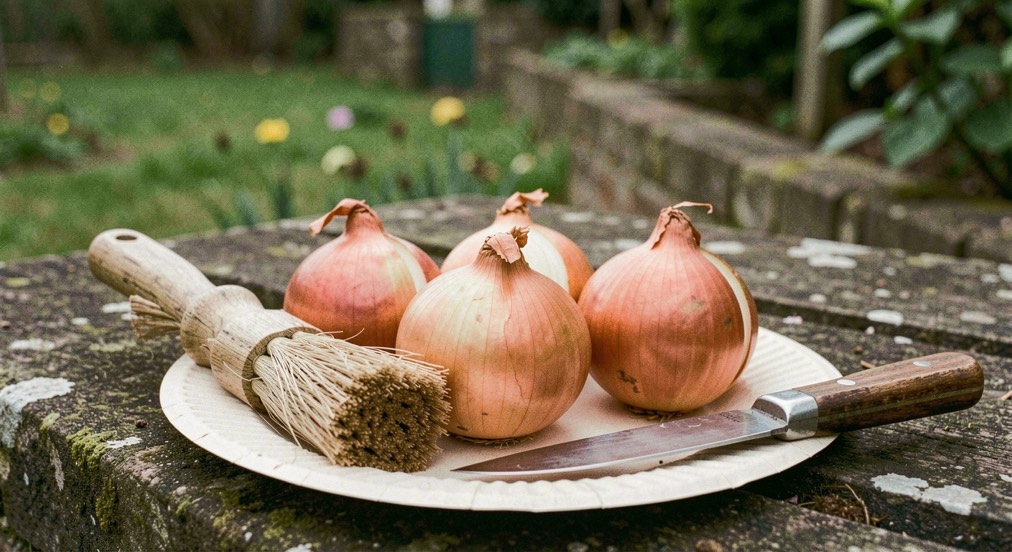
The preparation hints archived on this address read like a work method rather than a hobby note. Flowers are picked the evening before, kept in water somewhere cool, and chosen as blooms just opening, with foliage from the same plant and no broken tip or brown spot. Uniformity and refinement are named as the aim, not size. Fruit carries its own logic: root vegetables are sponged clean of soil, but the bloom is left on plums, because that pale film is part of the exhibit. Onions and shallots lose their outermost skin a week or two before the show to develop ripening colour.
Why the exact number matters more than the size
Every class specifies the exact number and kind to be shown, and the penalty for getting it wrong is disqualification, not a lower place. Runner beans are staged as nine pods with stalks, long and straight. Carrots and parsnips carry tops cut about five centimetres above the crown; beetroot keeps most of its leaves; cabbages, cauliflowers and lettuce go on the table with roots attached, and lettuce is lifted as late as possible because it wilts on a warm day. Pot, bowl and basket sizes are maxima, measured inside the rim. The pattern across all of it is the same: the class defines the exhibit, and the exhibitor’s craft lies in matching it exactly with the most even set of specimens the plot can produce.
What happens to what is left
Nothing is removed before the close of the show, and exhibits travel and wait at the exhibitor’s own risk. An exhibit may be reserved and collected at the stated time; anything left on the tables afterwards is auctioned, with the proceeds going to the organising horticultural and allotments body. Cups are held for one year only and must go back a month before the following show. The bench, in other words, ends as it begins, with rules about time.
Those rules are kept by people rather than by paper. Our page on the volunteer rota behind a small society sets out the jobs a show cannot run without, and what brings a helper back the following year.
The archive behind this page
The facts above come from three pages of the horticultural society once published on this domain and preserved by the Internet Archive’s copy of the show page, together with its rulebook and exhibitor hints. The archive holds the full class list and entry arrangements, including a count of ninety-three classes, four of them for children under ten, which this page does not reproduce.
The show paperwork is one kind of survey; the other kind, the one a council runs over its parks and playing fields, is described in how open space is assessed.