Soil in winter: humus, worms and structure
Winter is when the soil does its quiet work: humus forms, worms multiply and a bare plot either holds its life or loses it. This page sets out what humus actually does to sand and clay, how a heap rots, and the covering you should sow before the end of October.
The editors of Notes from W4 –
What humus does to a grain of soil
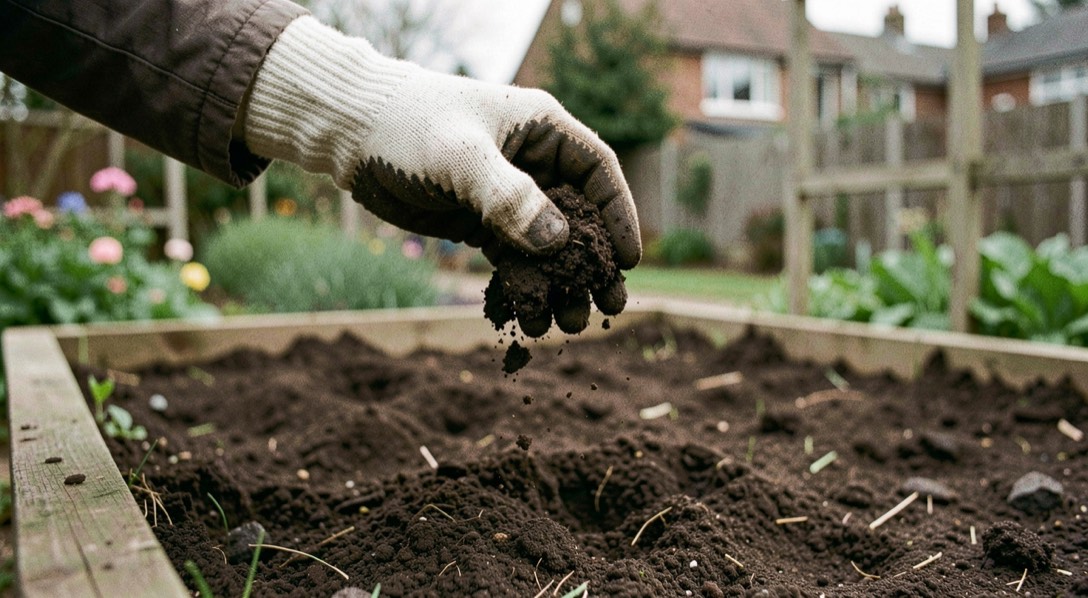
The old composting notes archived on this address in 2006 describe the finished product as a dark, crumbly, soil-like substance, and they put its value in one image: the rotted matter encircles each grain of earth. That coating is the working part of the soil. On sandy ground it holds moisture and binds the grains together. On clay it does the opposite, keeping the particles apart so the soil is less sticky. The same substance carries the nutrients plants live on, and it helps them resist disease, pests and infection. There is no contradiction in a material that glues sand and loosens clay: in both cases it is doing the same job at the scale of a single particle.
Why good soil feeds weeds too
Humus does not choose sides. A soil rich in rotted matter feeds the vegetables and it feeds the weeds with equal enthusiasm. The archived notes add one refinement: some plants have adapted to poor soil and do not care for a rich one, but even they need a little of it. The practical reading is straightforward. Feeding the soil is not the same as feeding a crop; it is a change to the ground that everything growing in it shares. Plan the weeding around the feeding, not after it.
How many ways are there to make compost?
As many as there are gardeners, the archived notes say, and they group them into a few families. Some gardeners keep a single heap, add to it continuously, and dig finished compost from the base, throwing anything unrotted back on top. That unrotted edge is normal even in the best heaps, because the sides stay cooler than the centre. Others dig a trench in late autumn, winter or early spring, fill it with organic matter and let the worms do the work; the notes recommend covering each addition with soil, about an inch every six to nine inches of matter, to hold the nitrogen in and keep flies down. A third way is the built bin, and our page on heaps, trenches and what goes in works through the materials, including the manures that bulk a small supply of waste up to a heating size.
Turning, air and the first burn
A heap that is going to heat needs turning, and the notes give the reason twice over: turning lets you control the moisture, and it moves the cool outside into the hot middle. Timing matters. The first turn should come just after the initial burn, so that air enters the mass. A perforated pipe stood upright through the centre does the same job passively. The rule the notes underline is simple: the more oxygen in the heap, the better, with one exception. Compost buried in the ground is worked by a different set of bacteria, and does not need the same air.
Who does the finishing work?
Once the initial burn has passed, the worms move in. Where a plot has none, the notes mention buying tiger worms, described as hard-working, and with them myriads of other life forms living out generations in the heap until the contents are changed almost beyond recognition. That finished material is what contains and makes the humus described above. In the soil around it, worms stay active and bring casts to the surface, which the notes say feed plants better over the medium and long term than expensive chemicals. The link between heap and ground runs both ways: good compost brings worms, and worms keep the ground alive. The full sequence, from black jelly to worm casts, is in the winter composting notes preserved by the archive.
What to do with bare ground meanwhile
Between the clearing of crops and the digging in of spring, the worst thing for soil is nakedness. Left bare, the archived autumn notes say, the life in it leaches away, and it takes time to bring back fertility. The remedy they recommend is green manure, sown before the end of October and dug in in spring. Ryegrass and grazing rye are named as reliable over-winterers; most other green manures are not. Sow the rye where you will dig it in, and allow at least a month between digging it in and sowing seed, because compounds released as it decays can inhibit germination. Our page on covering bare ground before winter takes the sequence step by step.
Water, heat and size
Two figures from the notes are worth carrying to the plot. A bin built from pallets should measure at least five feet, about one and a half metres, inside, because that volume holds enough heat to kill weed seeds and potato haulms. And if urine is used to speed the build-up, the notes give the dilution as ten parts water to one part urine, during the build-up stage only, never after the first burn. Keep the heap just moist, cap it with earth or a sheet of plastic to hold the gases and the rain out, and cover with sacking or an old blanket: the worms, the notes add, like it dark.
A winter order of work
Take the arithmetic of the season as it comes. Sow rye on cleared ground before the end of October. Build or fill the bin to five feet if you want it to heat, and if you can turn it twice, make the first turn just after the first burn. Dig trench material under with its inch of soil every six to nine inches. Then leave the ground covered and the worms to it until spring, when a month between digging in the green manure and sowing the first seed is the least gap to allow.
Web.archive.org is the Internet Archive’s stored copy of past web pages. The composting notes used here were captured from this domain in 2006 and remain readable there in full, including the parts on worms, turning and the black jelly itself.
Winter is when the ground shows what it is: when a plot stands in water deals with the wet version of that problem, and reading a garden’s soil with the one a buyer meets.